
Yokohama National University
The five principles of Be Active, Be Innovative, Be Open, Be Global, and Be Diverse are the foundation of YNU’s education and research.
The diversity of approximately 10,000 Japanese students gathering from all 47 prefectures, as well as around 800 international students from approximately 80 countries worldwide, supports these principles with infinite possibilities.
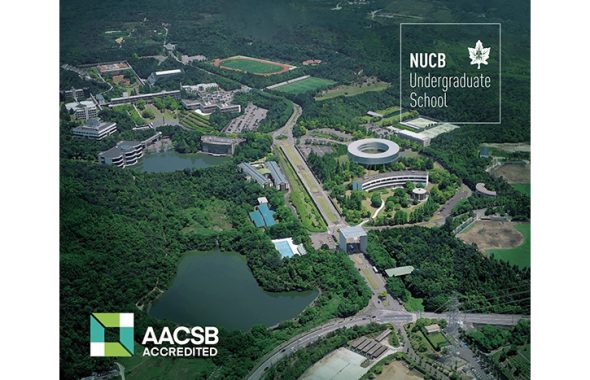
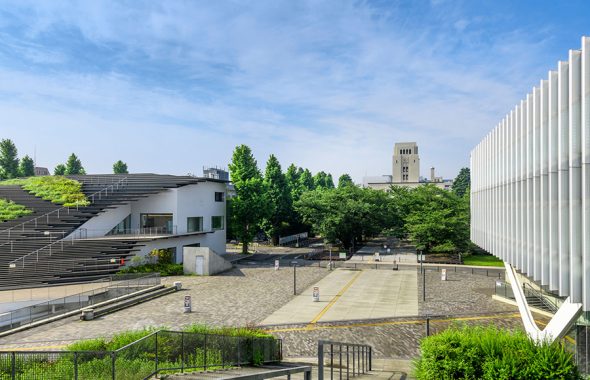
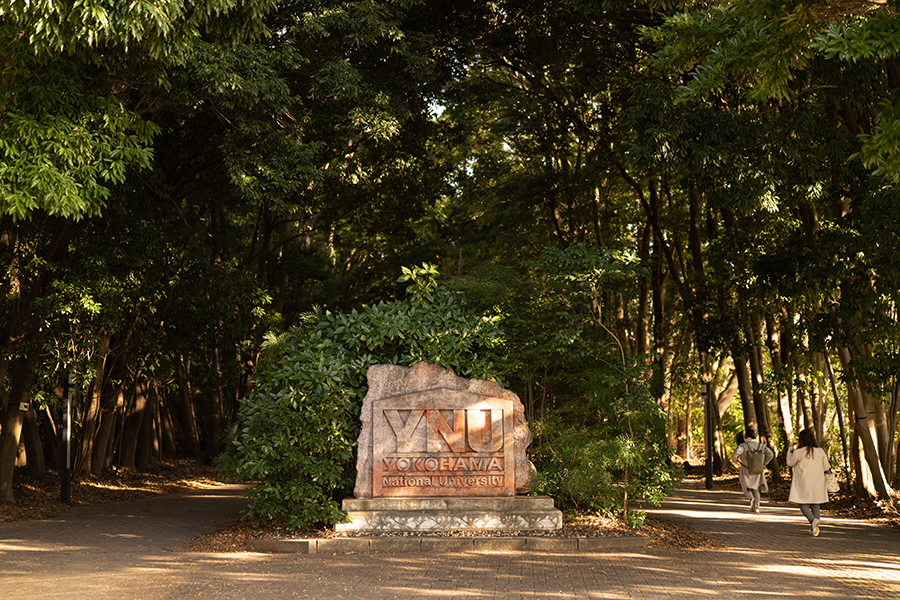
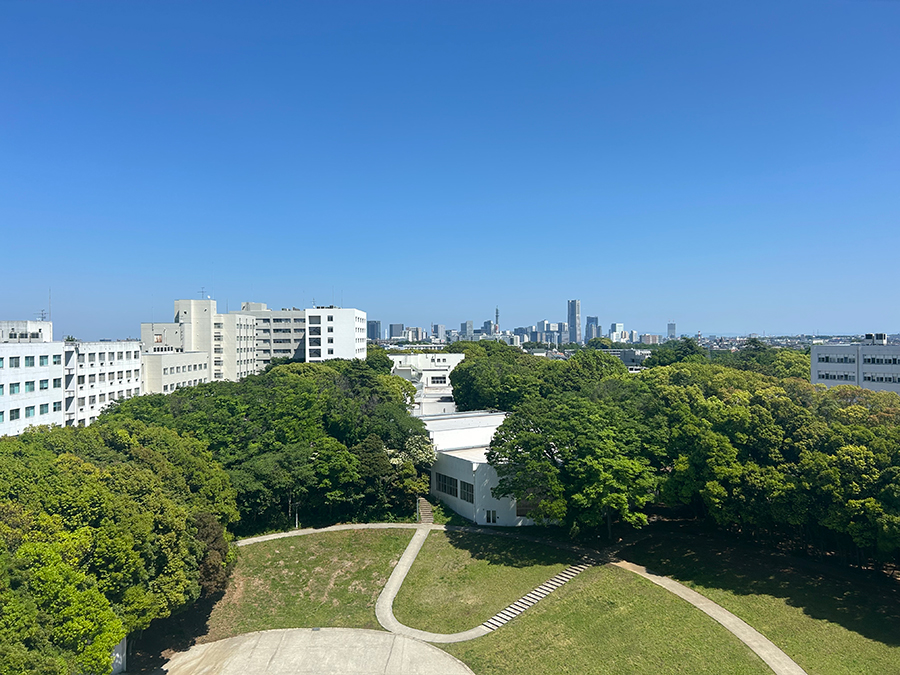
Yokohama, Japan’s birthplace of civilization and enlightenment, is recognized as a global hub where international corporations gather. It is also a charming tourist destination with attractions like the Minato Mirai district and Chinatown. Despite its location in this bustling metropolis, YNU sits on a serene and green campus.
The practical learning pursued at YNU’s five colleges, and six graduate schools is based on the deep-rooted history and tradition of Yokohama as a thriving city of trade, commerce, and industry. We provide interdisciplinary education in the fields of humanities and social sciences as well as science and engineering, fostering individuals capable of addressing global and local challenges.
We have years of experience in hosting enthusiastic international students and researchers. As a result, there is a range of languages, culture, religions, and values in YNU, as well as systems and environments in place to harness such diversity and enrich campus life for all.
Going forward, YNU will continuously strive to be a vibrant educational hub with a diverse student body, and will continue to disseminate world-class educational and research achievements to create a better future.





Degree programs in English (undergraduate)
Undergraduate Program
YOKOHAMA Socrates Program
Degree programs in English (graduate)
Master Programs
Mechanical Engineering, Materials Science, and Ocean Engineering
Chemistry and Life Science
Mathematics, Physics, Electrical Engineering and Computer Science
International Infrastructure (IGSI)
Infrastructure Management Program (IMP)
Doctoral Programs
Economics
Japanese Management
Transnational Law and Policy
Mechanical Engineering, Materials Science, and Ocean Engineering
Chemistry and Life Science
Mathematics, Physics, Electrical Engineering and Computer Science
Urban Innovation(Urban Infrastructure Field)
Financial aid and Tuition Waiver
Tuition waiver program
The program offered by YNU for privately financed graduate international students awards those who have excellent academic records a full, half, or 30% waiver of their tuition fees (full or half waiver for doctoral programs) after they pass the application screening.
Scholarships
At YNU, about 20% of privately financed international students receive some financial aid each year. In most cases, applications are only accepted after entering the university.
Tuition waiver and Scholarship
Japanese language education after enrollment (required or elective)
At Yokohama National University, Japanese classes are provided for all international students, including undergraduate, graduate, research, and short-term exchange students. Each student is required to take a placement test before enrolling in a Japanese language course for the first time.
Japanese classes are divided into six levels from beginner to advanced, more specifically Beginner 1 (100), Beginner 2 (200), Intermediate 1 (300), Intermediate 2 (400), Advanced 1 (500), and Advanced 2 (600). At each level, Integrated Japanese (reading, listening, speaking, and writing), Skill Training, and Kanji classes are provided. For the timetable and registration procedure, read the Japanese program pamphlet. For details on each course, refer to the WEB syllabi.
Even if you do not need to receive credits from a Japanese course, course registration is still necessary. For details on the course registration procedure, consult the Japanese program pamphlet. By following the course registration procedure and meeting the requirements for completion of the course, you can have a certificate of attendance issued for you even if you do not earn credits from the course.
*Whether or not studying Japanese is required depends on the program.
Dormitory
YNU provides four dormitories with a total of more than 600 rooms for international students. Application periods, procedures, and eligibilities differ for each dormitory, please check the following site for detailed information if you wish to apply for YNU Student Dormitory.
Student Support
CoE and Visa
YNU is affiliated with an administrative scrivener (gyosei-shoshi) to provide support for international students in obtaining their CoE.
*International students need to obtain a necessary status of residence (normally “student” visa) to enter YNU. To get the visa, they need to obtain the “Certificate of Eligibility (CoE)” from an Immigration Bureau in Japan.
“Tutor” (Student Supporter) System
Senior Japanese or international students serve as “tutors” for newly
admitted international students to provide the necessary support for daily
life and studying Japanese and other specialized subjects.
Necessary Procedures Before Entering YNU
“Tutor” (Student Supporter) System
Exchange, support, and other events and services for international students