
University of Tsukuba
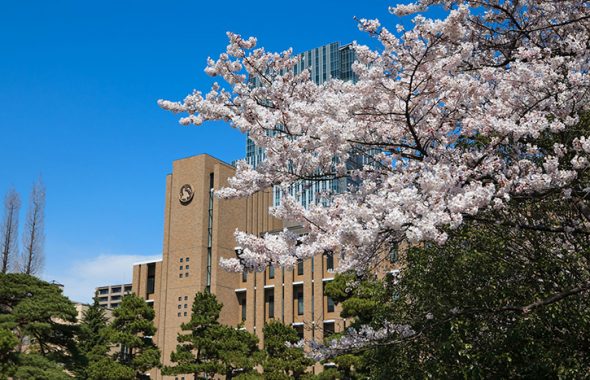
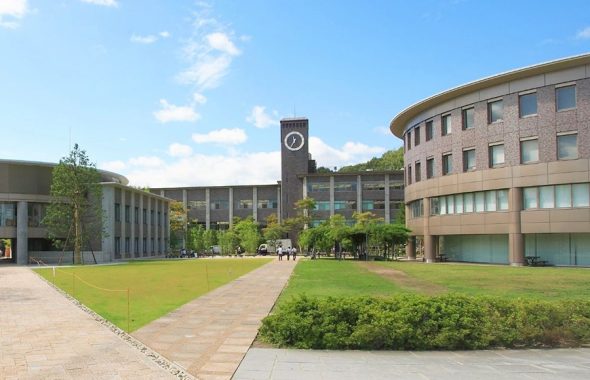
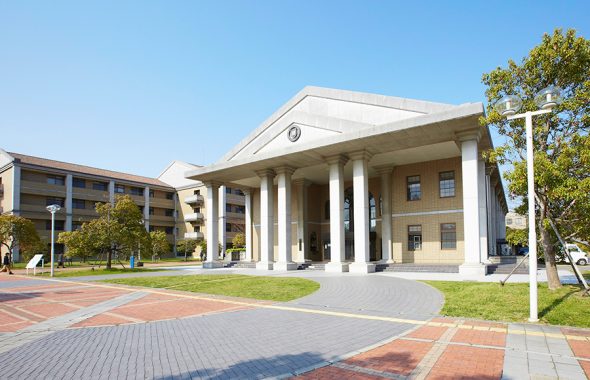
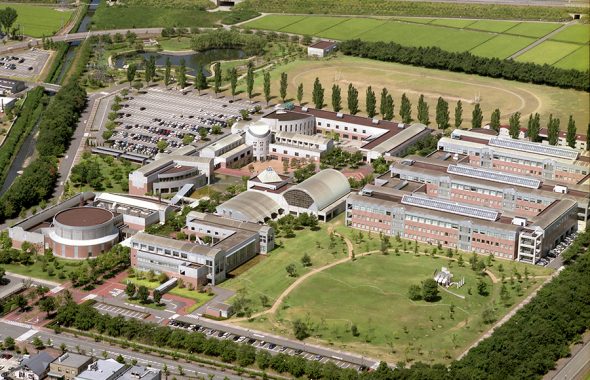
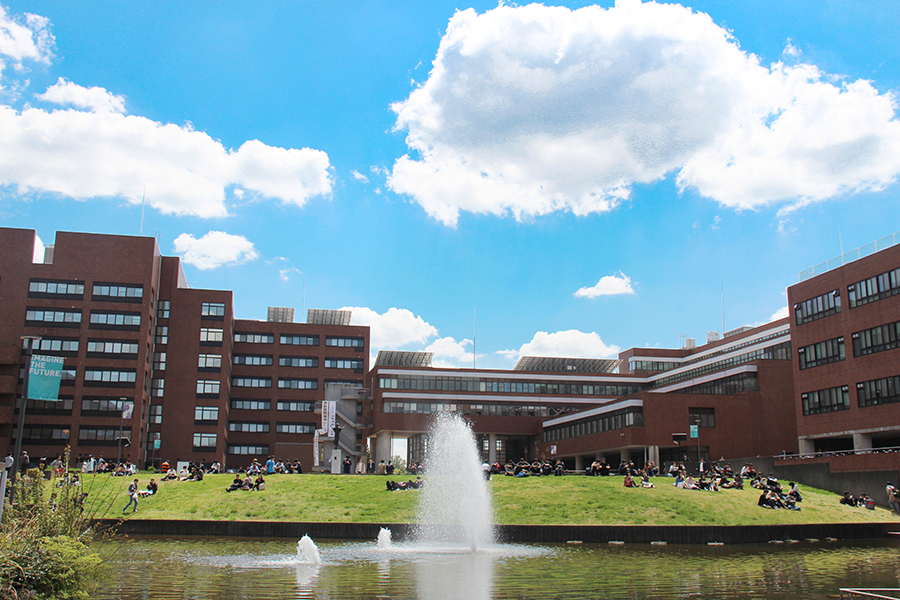
The University of Tsukuba was established in October 1973, due to the relocation of its antecedent, the Tokyo University of Education, to the Tsukuba area. As the new concept comprehensive university in Japan to be established under a country-wide university reform plan, the University has featured “Openness” with “New Systems for Education and Research” under a “New University Administration.” The university reform plays a major role in our continuing effort for improvement. We are striving to create a unique, active, and internationally competitive university with superlative education and research facilities.
University of Tsukuba aims to establish free exchange and close relationships in both basic and applied sciences with educational and research organizations and academic communities in Japan and overseas. While developing these relationships, we intend to pursue education and research to cultivate men and women with creative intelligence and rich human qualities.






Degree Programs in English (Undergraduate program)
7 courses in 5 programs are taught in English. Students’ Japanese language level will not affect them to enter these courses. All required classes are taught in English until graduation : Geoscience, Biology, Agro-Biological Resource Sciences, Global Issues, International Social Studies, Interdisciplinary Engineering, Medical Sciences (transfer only).
Degree Programs in English (Graduate program)
In addition to degree programmes conducted in English, many other graduate degree programmes offer research supervision in English.
Please check the website for the application examination dates, which vary depending on the degree program.
Short-term Program
International Student Admission Guide Non-Degree Research Student
Non-degree research students are those persons who conduct research about a specific research topic under the guidance of an academic advisor. Upon receiving permission from their academic advisor or the instructor(s) in charge of courses, Non-degree research students are allowed to attend courses related to the research topic, but they cannot earn credits nor are they eligible to receive Master’s or Doctoral degrees.
Prior to application, applicants must obtain the informal consent of the prospective academic advisor to supervise the research activities during the period of non-degree research student. The applicant is not required to come to Japan for selection process because it only proceed through a document screening process. Eligibility criteria clarifies that Non-degree research students must have bachelor’s degree, and it is defined that the major purpose for being a Non-degree research student is to prepare for the graduate school admission.
Non-degree Student (Credited Auditors)
“Credited Auditors” is a lifelong education program that allows the public including working professionals to study part‐time and for the university to evaluate their learning outcomes.
Enrolled auditors can take courses offered by programs at the University of Tsukuba, and the university gives them a credit if they complete a course.
A broad range of courses are available, and everyone is welcome to learn as a credited auditor.
Scholarship
Undergraduate and graduate students who face financial difficulties and who demonstrate excellent academic records may be exempt from part or all of the tuition payments.
The tuition exemption system, however, is not available for non-degree research students and credited auditors.
For further details, please inquire at the Division of Student Welfare, Department of Student
Affairs (Financial Support), which is located on the 3rd floor of the Student Plaza or your Academic Service Office (Registrar and Student Support).
Scholarships for privately-financed international students are divided into two types according to the application method: The first type of scholarship requires application through the university, while the second type allows direct application to the scholarship foundation.
Japanese language education after enrollment (required or elective)
At the Center for Education of Global Communication (CEGLOC), we provide tailored Japanese language education for international students. Our comprehensive support ranges from basic Japanese necessary for daily life to advanced proficiency required for employment at Japanese companies. We offer personalized assistance to meet your specific goals and needs.
Dormitory
Student Residence Halls have been established to offer its students excellent study environment along with the opportunity to experience autonomous civic life. For the other housing options, accommodation for short-term students (Short Stay House) has been installed in April, 2016, and shared accommodations (Global Village), which focuses on international exchange, commenced its operation on April 1, 2017.
A total of 65 residences with about 3,500 rooms are located in Ichinoya, Hirasuna, Oikoshi and Kasuga Area.
Student Support
Tutor System
To ensure a smooth entry into your new academic and daily life, we offer individualized support through our tutor system. Each international student will be paired with a Japanese student tutor who will provide comprehensive assistance.
Student Counseling
The International Student Counseling Room is dedicated to supporting all international students. Our advisors are available to provide guidance in English and Japanese on a wide range of issues, including academic issues and private matters. Please feel free to reach out for assistance whenever needed.