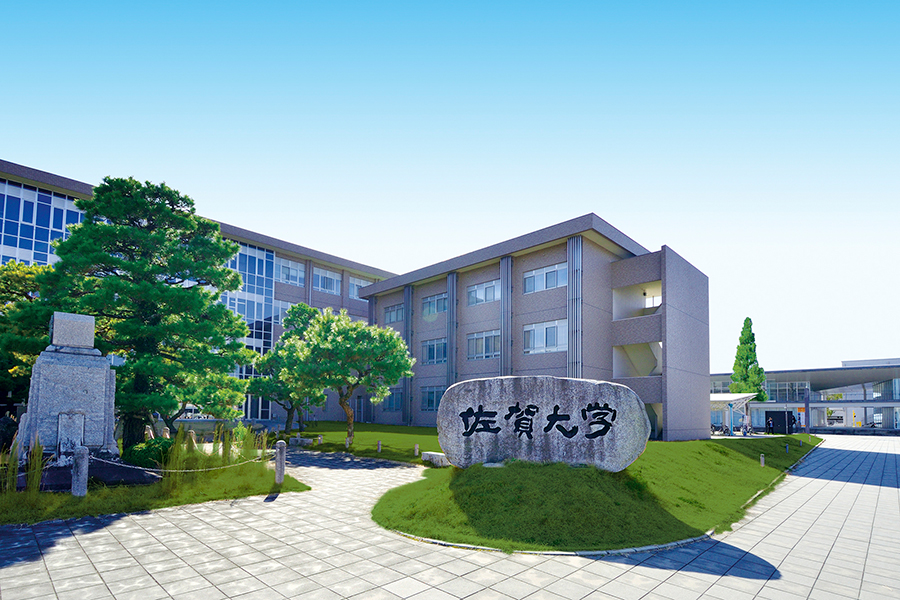
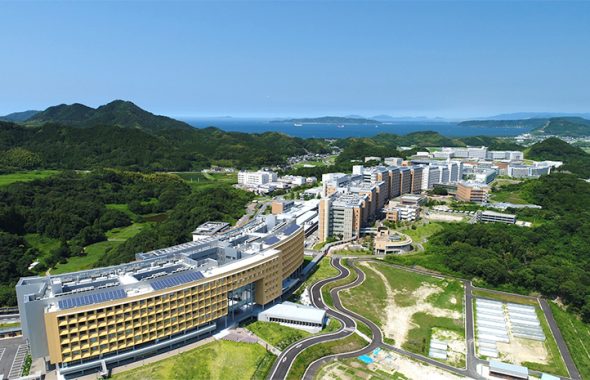
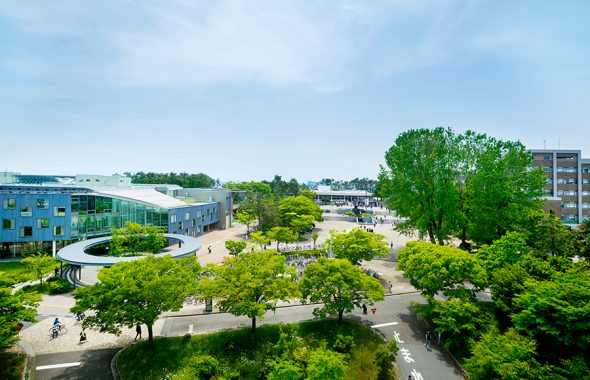
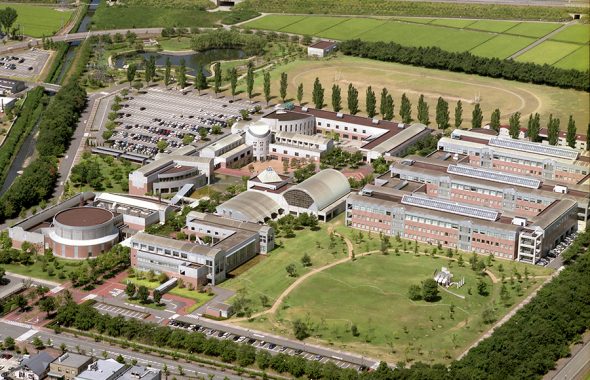
Saga University was established in 1949 as the former Saga University and Saga Medical University in 1976, merging the two universities in 2003 and becoming a national university corporation in 2004. It is a university with six faculties and six graduate schools, with approximately 5,800 undergraduate and 790 graduate students. To date, the university has produced more than 60,000 human resources. In addition to the acquisition of knowledge in specialized fields, the university focuses on education that fosters a broad range of liberal arts, the ability to cooperate with others, the ability to learn and act independently, and the ability to solve local problems. We are working to solve the issues facing the region while utilizing our advanced research facilities in addition to the Saga University Art Museum, the University Library, the University School, and the University Hospital, which supports regional medical care as a hospital with special functions, the University also makes use of cutting-edge research facilities such as the Ocean Energy Research Center, which promotes research aimed at realizing a sustainable society, the Synchrotron Radiation Research Center, and the Hizen Ceramic Research Center.
Degree programs in English (graduate)
Education Program for Advanced T-shaped Person for Co-development of ASEAN and Japan (EPAT)
Interdisciplinary Education Program for AI and Data Science Specialists (IEPAD)
Strategic International Postgraduate Program (SIPOP)
Post-graduate Program for Agribusiness Global Human-resources Development (PPAGHD) in Graduate School of Agriculture for the Foreign Students
Saga University has dormitories for international students, but it is not always possible to move in if there are no vacancies. We do not provide assistance for arranging private apartments.